
CHECK OUT OUR MEDIA MENTION IN FOOD BUSINESS NEWS
12-August-2025 | Donna Berry
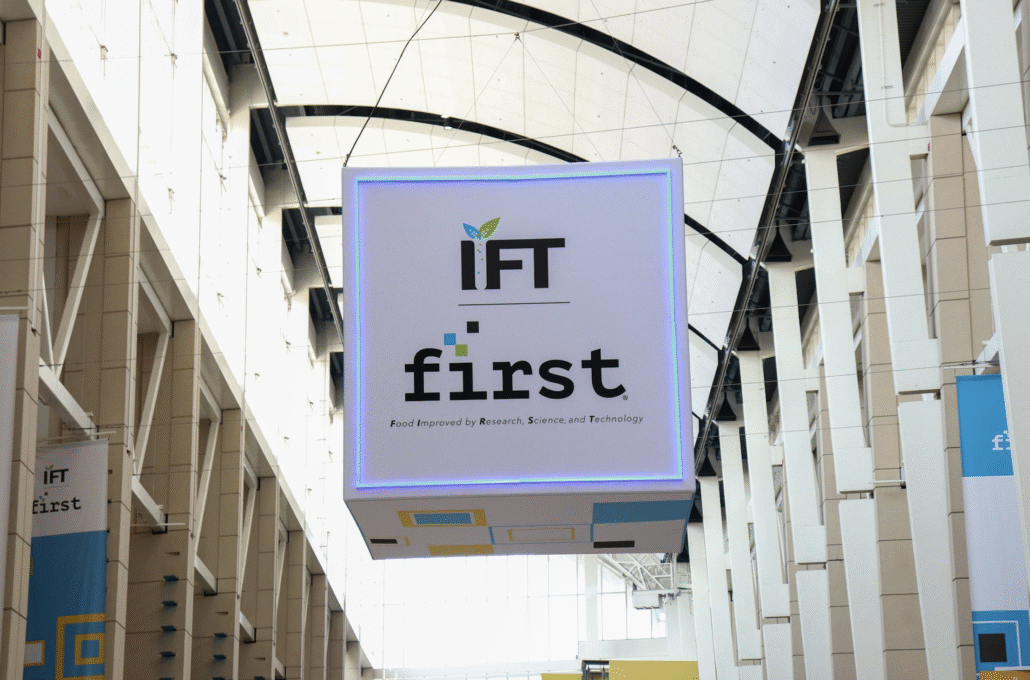
Formulating nutrient-dense foods with quality proteins and functional carbohydrates stood out as a major theme at IFT FIRST 2025, held July 13-16 in Chicago. While cutting or eliminating ingredients with negative perceptions, such as added sugars, sodium and anything viewed as artificial, was a focus, adding nutrition to foods and beverages dominated many conversations.
Unlike the past few years when exhibiting suppliers simply promoted their new sources of macronutrients, this year the focus was on the quality of the ingredients. Many had clinical data to support their use in proactive nutrition applications and how they complement each other when used to enrich everyday foods.
Ingredient suppliers showcased how proteins – everything from collagen to whey and plants to yeast — and better-for-you carbohydrates like fibers, low-glycemic and prebiotics, can come together in the same application. They are “nutrients that are easy to understand,” said Lu Ann Williams, global insights director at Innova Market Insights, Arhnem, The Netherlands.
Three exhibitors collaborated to serve a prototype exemplifying the theme. The result was a clean label, milk-based sports drink that provides a range of benefits for improving performance. It delivers sustained energy, enhances the effects of endurance training and promotes efficient fat burning.
By starting with a lactose-free milk base with 13 essential nutrients — protein, calcium, phosphorus, iodine, potassium, selenium, zinc and vitamins A, D, B2, B3, B5 and B12 – the beverage provided positive nutrition. The beverage featured a protein boost with bioactive collagen peptides from Gelita, Sioux City, Iowa. Daily consumption of the collagen has been shown to improve running capacity, increase fat-free mass and support muscle regeneration compared to a placebo, according to the company.
The beverage then was fortified with a carbohydrate from Beneo, Parsippany, NJ. It provided mild sweetness and a sugar-like taste, all while having a low-glycemic profile. The ingredients’ effects include sustained energy supply, fat oxidation and hydration, supporting fitness goals and body composition.
For visual appeal, a brown carrot color from California Natural Color, Fresno, Calif., was included. It is a natural color available in a crystal format. It is stable — holding up to heat, light and pH – and soluble. The color also aligns with consumer preference for a clean label with the ingredient labeled as “vegetable juice for color” in the United States, supporting a simple, recognizable label that consumers can trust.
Weight loss and management
Dairy made a noticeable comeback at IFT FIRST 2025, having been overshadowed in previous years by plant protein suppliers showcasing their innovations. Leprino Nutrition, Denver, for example, served a high protein salted caramel pudding formulated to support muscle repair and growth after exercise. The protein content – 20 grams per 130-gram serving – also provides satiety, helping curb hunger pangs and aiding weight management, according to the company.
The American Dairy Products Institute (ADPI), Elmhurst, IIl., showcased a clear, mango-flavored gel-like dessert made with acidified whey protein isolate and galacto-oligosaccharides. The latter is a prebiotic fiber inherent to dairy and associated with improved mineral absorption and brain health.
KJ Burrington, vice president of technical development at ADPI, said the low-calorie, protein- and fiber-enhanced dessert was intended to appeal to consumers using GLP-1 medications. The consumers rely on medications that trick the body into feeling full by manipulating the satiety hormone known as glucagon-like peptide-1 (GLP-1).
The dieters need nutrition but barely have an appetite. Many are turning to single-serve portions of easy-to-eat, high-quality, protein foods, which is fueling dairy’s rising popularity, especially in beverages and bars. Formulators are boosting the nutrition composition of the products to make them more complete. Some may add prebiotic fibers, probiotics or slow-metabolizing sugars.
Alongside supporting the body’s natural GLP-1 response, developing satiety-promoting diets is key to combating a major consumer concern: regaining weight after dieting. Fiber and protein play important roles in generating a natural feeling of fullness.
New ingredients from side streams
Protein and fiber suppliers exhibiting at IFT FIRST showcased solutions that utilized upcycled ingredients. Burcon NutraScience Corp., Vancouver, BC, for example, debuted a line of 90%-plus protein ingredients derived from the side stream of sunflower processing.
“Sunflower is the world’s third-largest oilseed crop – behind soy and canola/ rapeseed — and is a natural oilseed source of non-GMO, non-allergenic, clean label protein,” said Paul Lam, director-investor relations and communications at Burcon. “Sunflower seed is an excellent source of nutrition, composed of approximately 21% protein and 51% oil, with a rich source of dietary fiber, vitamins and minerals. Once the oil is extracted from the seeds, the remaining meal byproduct is traditionally fed to livestock as animal feed.”
By upcycling the sunflower meal byproduct, Burcon’s process allows for the production of pure, food-grade protein ingredients from sunflower seeds. The ingredient is sustainable and clean tasting, according to the company.
Lallemand Bio-Ingredients, Montreal, exhibited how yeast-based ingredients fit into sustainability programs. The company uses fermentation biotechnology to produce a non-animal complete, digestible protein with a high satiety index. It contains all essential amino acids, offering a quality comparable to milk protein, yet allergen-free, said Silvia Soragni, category manager-savory ingredients, Lallemand Bio-Ingredients.
“It delivers over 80% protein, with a mild taste and excellent dispersibility, allowing formulators to achieve ‘high in protein’ claims while maintaining the appeal of the final product, even in small-format foods,” Soragni said. “It’s a food ingredient, not an additive or a supplement. In the EU it can be labeled as yeast protein. In the Us it is generally recognized as safe with no upper addition limits for standard food use.”
At the end of 2024, Lallemand partnered with Dutch company Revyve to distribute its yeast-derived protein. It is made with upcycled brewers’ yeast, a side stream from Lallemand.
The yeast-based ingredients can create textures such as fluffiness, firmness, cohesiveness, crispiness and stretchiness. They work in gluten-free and egg-free applications, including baked foods, cheese and sauces, where allergen concerns often pose a barrier.
A startup pitch competition took place on the third and final day of IFT FIRST. It involved six finalists competing for financial support to help bring their products to market.
Plantible Foods Inc., El Dorado, Texas, was awarded first place for its rubi protein, a functional and nutritional plant-based protein ingredient that allows food manufacturers to replace eggs, dairy ingredients and synthetic emulsifiers with a single ingredient. The highly soluble protein foams, emulsifies and binds, often outperforming whole eggs, whey, skim milk powder and methylcellulose in commercial applications, said Tony Martens, chief executive officer. The company received $10,000 from the competition sponsor Seeding The Future Foundation.
Martens said the rubi protein is found in all green plants and plays a role in photosynthesis. The company has been able to produce it from lemna leafy green aquatic plants. Unlike most plant proteins, rubi contains all nine essential amino acids and has a protein digestibility score of one, which is similar to animal protein and soy.
“We grow lemna on aqua farms,” Martens said. “Lemna requires 10-times less water than soybeans and almost 100-times less than beef. It uses zero arable land.”
Upcycling was important messaging for many IFT FIRST exhibitors. Israel-based CarobWay, Ltd. launched its carob-derived prebiotic fiber, which has naturally occurring polyphenols. The compounds nourish the gut microbiota, delivering benefits to the gut without the discomforts often associated with fibers. Its positive prebiotic effects are currently undergoing preclinical assessment.
The fiber is sourced from upcycled carob pulp, taking a zero-waste approach. Carob, one of the most ancient food sources, is a uniquely sustainable and resilient crop that thrives on non-arable, rocky lands where other crops cannot grow, said Udi Alroy, CEO and co-founder of CarobWay.
Schaumburg, IIl.-based Comet launched a grade of prebiotic fiber made using an extraction process that uses wheat, the side stream of the plant that is not harvested for flour manufacturing. It is a gluten-free wheat fiber extract that contains a blend of prebiotics, including arabinoxylans, lignin and polyphenols. It has clinically proven metabolic health benefits and exceptional tolerability, even at four or more servings daily, according to research.
It was developed to fill the market need for a low-dose prebiotic fiber that may be used in many formulations due to its solubility and low viscosity, said Hannah Ackermann, vice president of marketing and nutrition affairs at Comet. The new grade is lighter in flavor and color than the original version.